

The African Pantry in the Diaspora: 10 Essential Products and How to Choose Them
From gindungo to palm oil, from fuba to dried fish: the guide to products that evoke nostalgia, how to recognize quality, and where to find them near you.
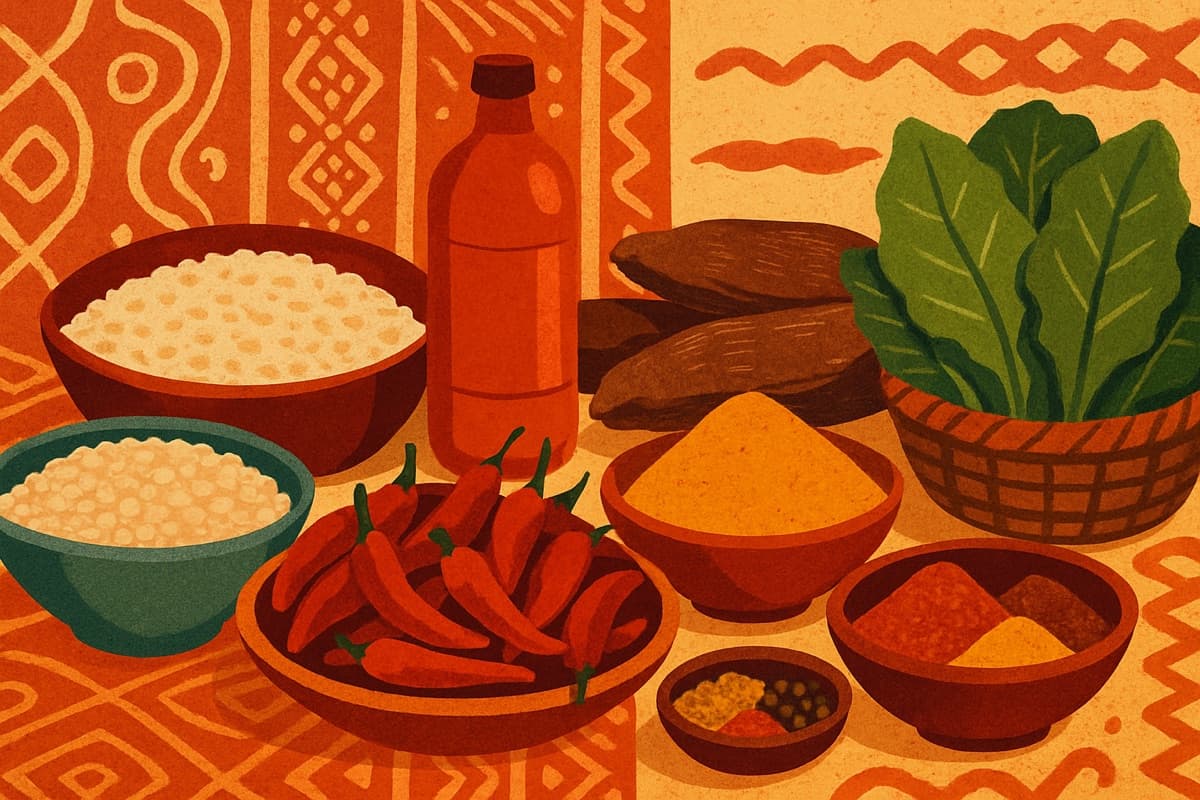
There are flavors that make a home in the diaspora feel like the homeland. This guide covers the essential products of Lusophone-African cuisine, with tips for making good choices in any African grocery store in Europe or Brazil.
What are the essential pantry products?
1. Gindungo (jindungo). The Angolan chili pepper, fresh, dried, or in paste form. A good jar has a bright color and strong aroma; start with a little — the intensity varies greatly.
2. Palm oil (dendém). The base of mufete, moamba, and many dishes. It should have a deep orange-red color; if it’s too solid, warm the jar in hot water before using.
3. Fuba. Made from corn or bombó (fermented cassava), it is the heart of funje. For beginners, corn fuba is milder; bombó has the more traditional flavor from northern Angola.
4. Cassava flour. For pirão, farofa, or to thicken sauces. Look for well-sealed packages and avoid moisture.
5. Black-eyed peas and butter beans. For Cape Verdean cachupa and palm oil bean dishes. Good quality beans are whole and uniform.
6. Corn for cachupa. Dried, hulled corn is the soul of rich cachupa. Soak overnight — it’s worth it.
7. Dried and smoked fish. From dried horse mackerel to smoked catfish, it adds depth to calulu and moamba. It should be well-dried, with no rancid smell.
8. Peanuts (ginguba). Roasted, ground, or in paste form, they are used in calulu, ginguba moamba, and Mozambican sauces like matapa.
9. Leaves: gimboa, cassava leaves, kale. Fresh or frozen in African grocery stores. Cassava leaves need to be well-cooked — buy from trusted suppliers.
10. Coconut and coconut milk. Essential in Mozambican and São Toméan cuisine, from matapa to São Tomé calulu.
How to recognize a good African grocery store?
- Stock rotation: fresh products and visible expiration dates.
- Variety of origins: a good store mixes products from Angola, Cape Verde, Mozambique, Guinea-Bissau, and São Tomé.
- Advice at the counter: those selling know how to explain the difference between fubas or how to prepare cassava leaves — a sign of a serious establishment.
Where to find these products near me?
E-migrantes gathers African grocery stores and shops in 22 cities across Portugal, Brazil, the Netherlands, the United Kingdom, France, and Spain. Search for "African grocery store" in your city or browse your city on the homepage.
Final tip
Buy little and taste first when trying a new brand — and always ask in the store how to prepare it. The conversation at the counter is half the flavor of the diaspora.